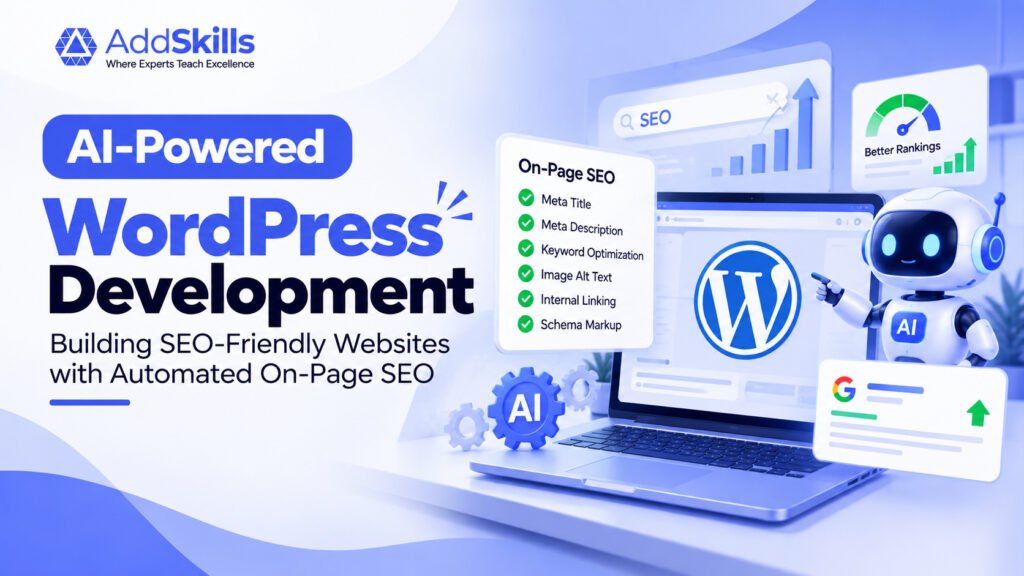
AI-powered WordPress development is transforming how websites manage content optimization and search engine optimization (SEO). By integrating Artificial Intelligence (AI) APIs into WordPress, developers can build intelligent websites that automatically analyze content, generate SEO metadata, identify optimization opportunities, and improve on-page SEO workflows.
Instead of performing every SEO task manually, businesses and SEO agencies can use AI-driven automation to streamline website optimization, reduce repetitive work, and maintain consistent SEO practices across multiple pages.
Key Features of AI-Powered WordPress SEO
1. Automated SEO Titles and Meta Descriptions
AI can analyze page content, target keywords, and search intent to generate relevant SEO titles and meta descriptions. The system can check for missing metadata, duplicate titles, and descriptions that require improvement before publishing.
2. AI-Powered Keyword and Content Analysis
AI can analyze content to understand its primary topic, search intent, keyword relevance, and topical coverage. It can recommend relevant subtopics, improve heading structures, and identify content gaps that may affect the usefulness of a page.
3. Intelligent Internal Linking
The system can analyze existing WordPress posts, pages, and custom post types to identify relevant internal linking opportunities. It can recommend contextual links and descriptive anchor text to improve website navigation and content discovery.
4. Automated Image SEO
AI can generate descriptive image alt text based on image context and page content. The plugin can also identify images with missing alt attributes and flag potential image optimization issues for review.
5. Schema Markup Generation
AI can help identify suitable structured data types, such as Article, BlogPosting, Product, and Organization. A custom WordPress plugin can generate and validate JSON-LD schema while ensuring that the markup accurately represents the visible content.
6. Automated On-Page SEO Audits
The system can check essential on-page SEO elements, including title tags, meta descriptions, heading hierarchy, canonical URLs, indexability settings, internal links, and structured data. AI can explain identified issues and suggest practical improvements.
7. Content Optimization and Readability
AI can review content structure, readability, topical relevance, and missing information. It can suggest improvements to paragraphs, headings, FAQs, and calls to action while maintaining the website’s brand voice and editorial guidelines.
8. Duplicate Metadata and Content Detection
The plugin can compare SEO titles and meta descriptions across existing pages to identify duplication. Semantic analysis can also flag potentially overlapping content, helping SEO specialists investigate keyword cannibalization and content consolidation opportunities.
How AI SEO Automation Works in WordPress
A custom WordPress SEO plugin can integrate AI services into the content publishing workflow.
-
Content Detection: WordPress hooks detect when a post or page is created, updated, or submitted for publication.
-
Content Analysis: The plugin collects relevant content, target keywords, metadata, and contextual information.
-
AI Processing: A secure backend sends the required information to an AI API for analysis and optimization recommendations.
-
SEO Validation: PHP-based validation checks metadata, required fields, duplicate values, and other predefined SEO rules.
-
Metadata Integration: Approved results are saved to WordPress or integrated with an existing SEO plugin, such as Rank Math or Yoast SEO.
-
Publishing and Reporting: The system records optimization status and generates a report highlighting completed tasks and remaining issues.
Background processing can handle API requests without slowing down the WordPress editor. Human approval can be required for significant content changes and other high-impact recommendations.
Technologies Required
-
PHP: Develop custom WordPress plugins, implement hooks, validate AI responses, and manage SEO metadata.
-
JavaScript and Gutenberg: Build an SEO analysis interface within the WordPress block editor.
-
WordPress REST API: Exchange content and optimization data between WordPress and authorized services.
-
AI APIs: Analyze content, generate metadata, classify search intent, and recommend relevant internal links.
-
WordPress Database: Store target keywords, audit results, processing status, and plugin configuration.
-
Rank Math or Yoast SEO APIs and integrations: Manage supported metadata without creating conflicting SEO outputs.
-
Background Jobs: Process content audits, schedule recurring checks, and handle failed API requests reliably.
API keys must be stored securely, and all AI-generated output should be validated before being saved or displayed.
Benefits for SEO Agencies and Clients
AI-powered WordPress SEO automation can help SEO agencies manage multiple websites with a more consistent optimization workflow. It reduces repetitive manual checks and allows specialists to focus on keyword strategy, content quality, technical SEO, and performance analysis.
For clients, automated recommendations can help maintain consistent metadata, identify missing SEO elements, improve content structure, and make ongoing website maintenance more efficient.
However, automation alone cannot guarantee higher Google rankings. SEO performance still depends on content quality, search intent, technical health, competition, backlinks, and overall user experience.
Conclusion
AI-powered WordPress development creates an opportunity to build websites that actively support the on-page SEO process. By combining AI APIs, PHP, JavaScript, WordPress REST API, and established SEO plugins, developers can automate metadata generation, content analysis, internal linking recommendations, schema validation, and recurring SEO audits.
The most effective solution combines AI-driven recommendations with rule-based validation, secure integrations, and human oversight.
The goal is to build an intelligent WordPress SEO system that makes website optimization more efficient, scalable, and consistent for businesses and SEO agencies.
Trending Posts


Stay ahead in tech
Get weekly industry insights, new course alerts, and career tips — directly from our expert faculty.